Exhibition
Min Yoon
A Pronoun of B
Aug. 29 - Nov. 15, 2026
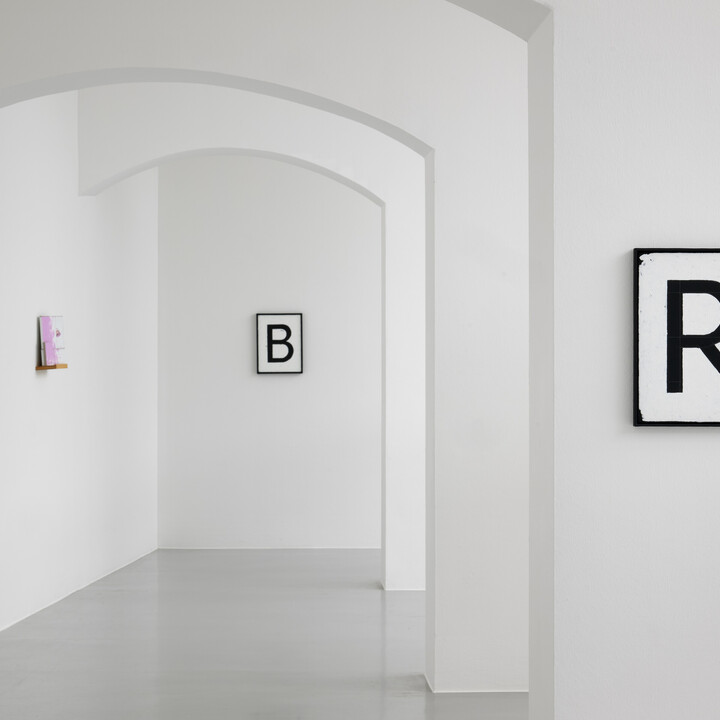
The Kestner Gesellschaft is pleased to present A Pronoun of B, the first comprehensive solo exhibition by Min Yoon (b. 1986 in Cheonan). Born in South Korea and based in Vienna, Yoon works across drawing, painting, and sculpture to reflect on processes of artmaking and the institutional structures that shape art and its production. His work often expands into exuberant, multipart installations whose playful structures weave together a range of interests, contexts, and materials.
The letter “B” in the title of the exhibition at Kestner Gesellschaft is believed to have evolved from an ancient Egyptian hieroglyph and a Proto-Sinaitic sign resembling the floor plan of a house. For Min Yoon, “B” represents a linguistic and spatial abstraction of the idea of one’s own space. Through “B”, he initiates a reconfiguration of Kestner Gesellschaft that begins outside the building, where he alters the institution’s name above the main entrance. Some letters appear to have fallen, while others have been added, together forming the sequence “NA DA UM.” In Korean, this can be read as 나다움(na-da-um), meaning “being myself” or “being as one is.” In German, by contrast, “na” (“well”), “da” (“there”), and “um” (around)” are perceived as distinct linguistic units. This play with language sets the tone for what unfolds inside the building, where the linguistic, spatial, and temporal dimensions of “B” are further explored through a new site-specific installation and newly created groups of paintings are presented alongside a selection of works from the past three years.
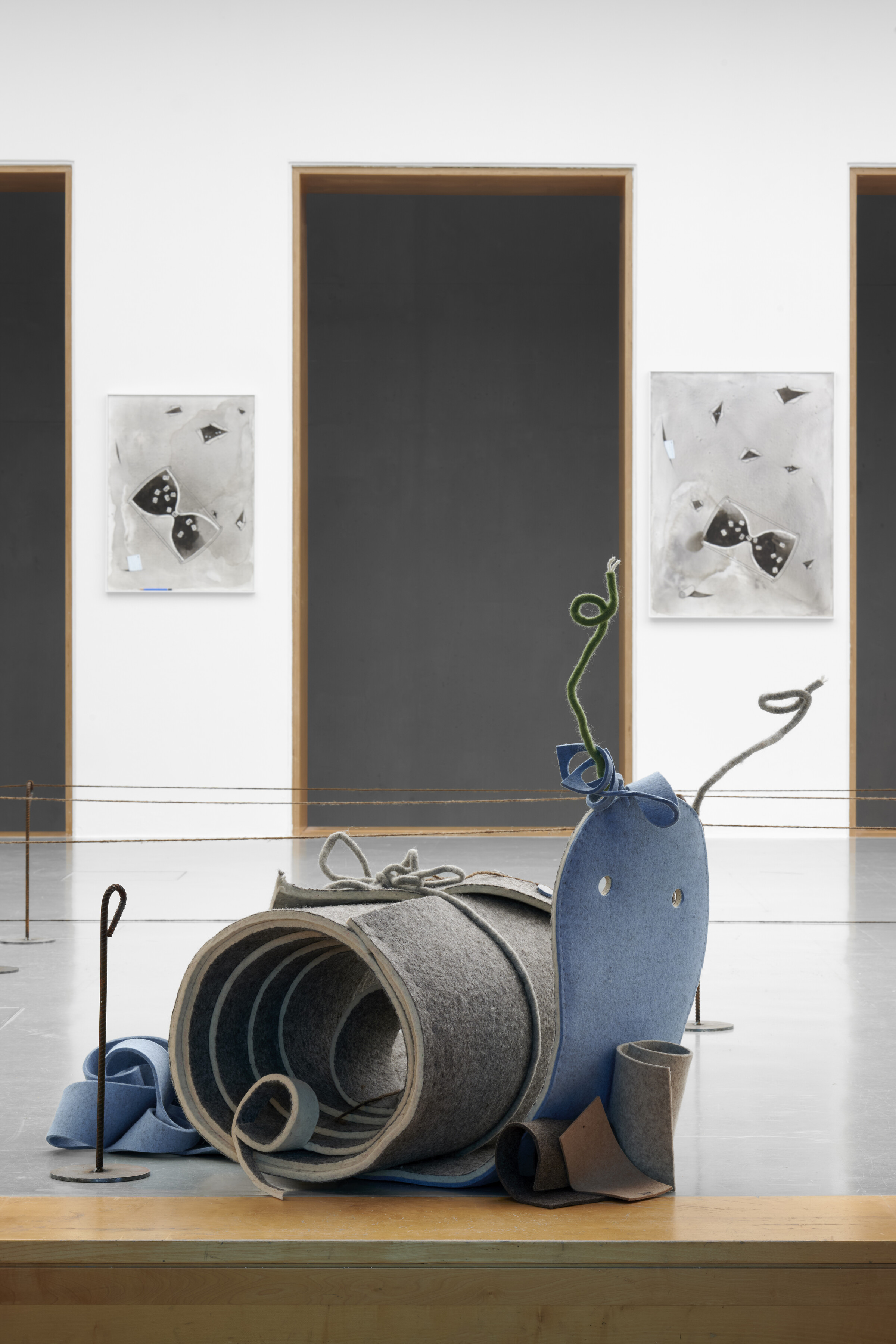
Upon entering the building, visitors encounter a stage-like ensemble of sculptures depicting figures: Other Hand (2025), an oversized felt hand puppet, alludes to the processes of artmaking and the labor that takes place behind the scenes. Exit Snail Enter Snail (2024), a large gray snail, evokes a slowed-down, embodied, and individual experience of time. Digest / Wait + ing Time to Emit (2024), a headless figure whose hat is mounted on a curved steel structure, links questions of time and waiting to the pressures of productivity and consumption. “Emit”—“time” read in reverse—means to send out, release, or discharge. Here, what is released are chains of wool and thread that stretch across the room between metal stanchions, imposing a physical distance between viewers and the sculptures. Opposite this ensemble, a new series of eight paintings, 1B Time through 8B Time (2026), depicts hourglasses filled with the letter “B”, turning “B” itself into a unit of time that also registers time’s B-side.
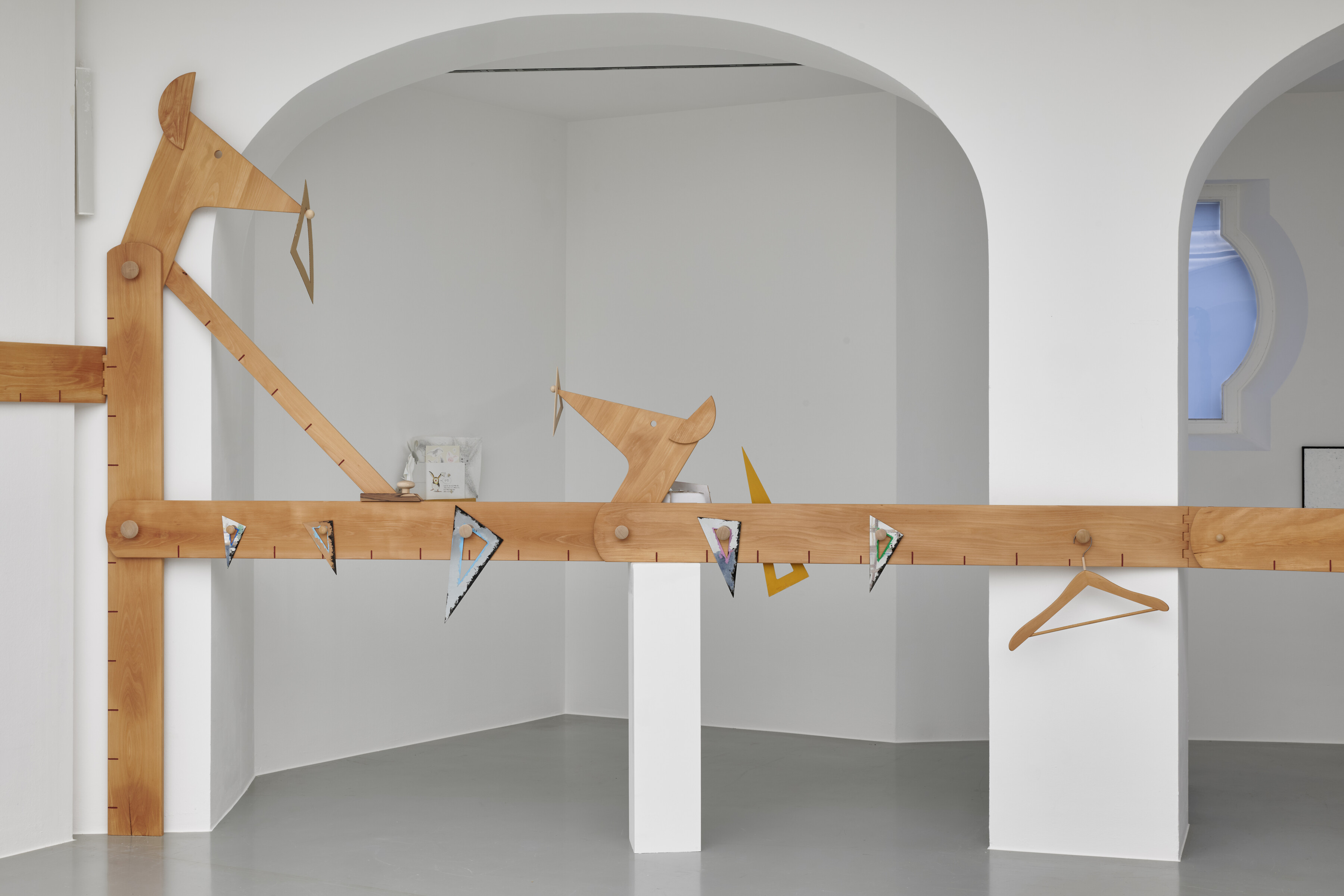
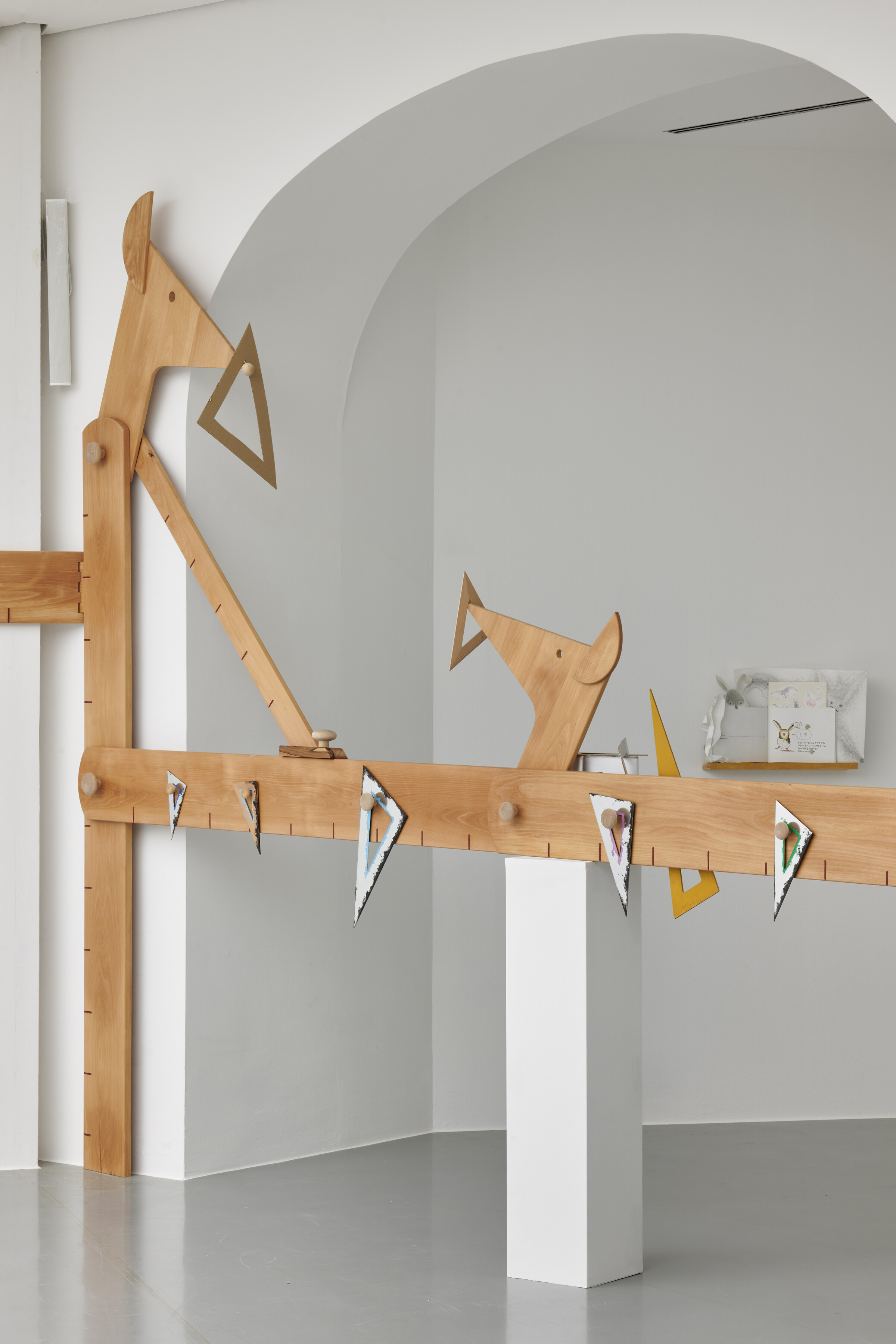
The hourglasses’ alternative measure of time opens onto a broader investigation of space and systems of measurement in a new room-encompassing installation, produced specifically for the exhibition and presented for the first time in Hannover. Extending along the walls of the second exhibition hall and across approximately 400 square meters, a sculptural wooden structure incorporates an array of objects, including animals, paintings, clothes hangers, wooden block wagons, and display supports found on site, such as pedestals and an easel. Engraved at intervals of 20.5 centimeters, the structure follows a unit devised by the artist that corresponds to no official standard. The installation instead proposes a personal system of measurement, raising questions about how spaces and bodies are quantified. Measuring devices such as a growth chart and a pantograph for copying and enlarging drawings become part of the sculptural apparatus, linking the abstraction of measurement back to the physical, lived body.
The installation is shown alongside a group of works engaging with children’s books and state-driven forms of categorization. The phrase “na-da-um” on the facade also points to Nadaum Books, an educational project launched in 2018 by South Korea’s Ministry of Gender Equality and Family. The project recommended children’s publications addressing diverse forms of family life and sex education for public schools and libraries but was abruptly discontinued following complaints and protests from conservative groups. Yoon responds to this controversy by presenting books that have been censored or banned in South Korea—a development that is increasingly observable on a global scale. Drawing on byeoldakku (별다꾸), a practice popular among young people in South Korea of playfully personalizing “everything,” he embellishes the books with paper, colored pencil, clay, and other materials. This form of banned book decoration becomes a small act of unruliness, reclaiming space curtailed by censorship while keeping marginalized experiences visible.
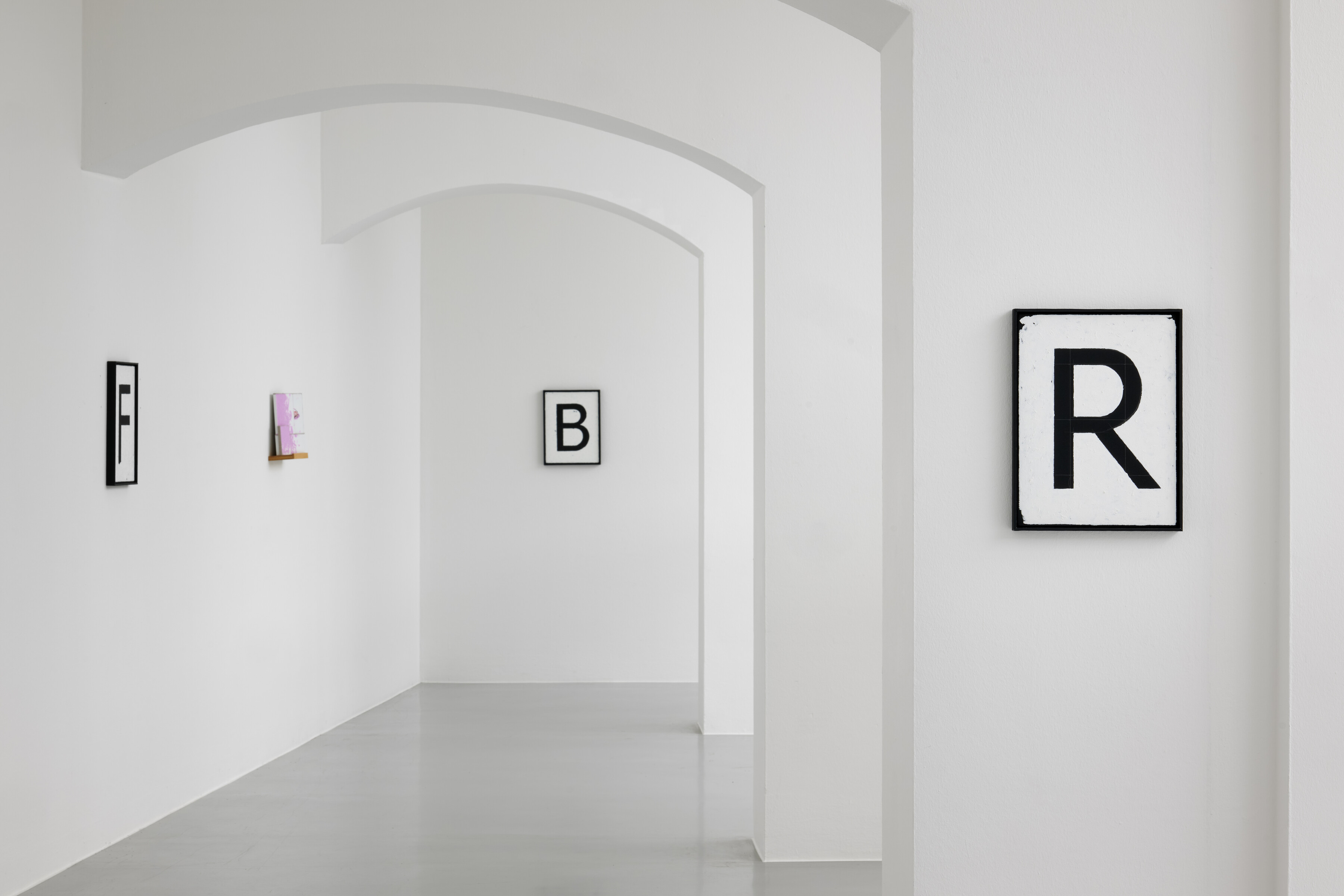
The books are presented alongside a second series of new paintings depicting the individual letters of the title A Pronoun of B, distributed across both ground-floor exhibition spaces. Dislodged from their original sequence, the letters become independent pictorial elements, inviting visitors to move from A to B and form their own associations from these deconstructed fragments. Yoon’s A Pronoun of B brings together spatial, temporal, and linguistic indeterminacies, turning measurement of the galleries—often the starting point for making an exhibition—into a work in itself.
Min Yoon (b. 1986 in Cheonan, lives in Vienna) studied Applied Arts at the Academy of Fine Arts Vienna from 2011 to 2018. Yoon has had solo exhibitions at Galerie Francesca Pia, Zurich (2024); Galerie Lars Friedrich, Berlin (2023) and Neuer Essener Kunstverein (2021). His work was included in group exhibitions at the Art Sonje Center, Seoul, the Kunsthalle Wien (both 2026) and the Secession, Vienna (2024), among others. His works are in public collections, including the Art Sonje Centre, Seoul; mumok (Museum of Modern Art Ludwig Foundation Vienna) and the Vienna Museum.
Curated by Eva Birkenstock, with Curatorial Assistance by Leonie Funke
A publication in the form of an artist’s book will be published on the occasion of the exhibition. Launch: December 2026
Min Yoon has created the limited edition A to B (1-14), 2026, of 14 oil paintings. Each painting features a single letter or a space, which together form the exhibition title A Pronoun of B. The works are on view in the exhibition and available exclusively through Kestner Gesellschaft.
Learn more about the exhibition and read the Exhibition Booklet: Min Yoon. A pronoun of B.
Installation Images

Visit us
Patrons / Partners