Exhibition
Karimah Ashadu
Crystalline
Aug. 29 - Nov. 15, 2026
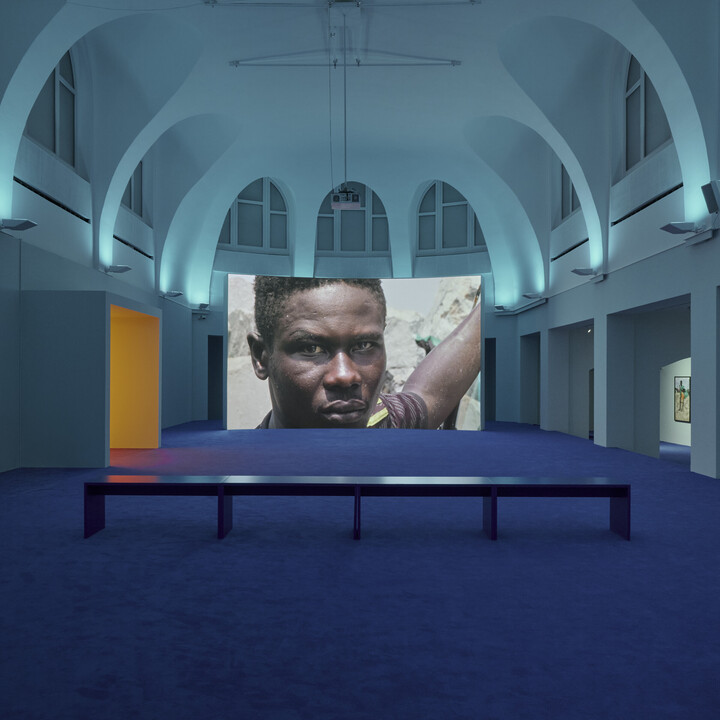
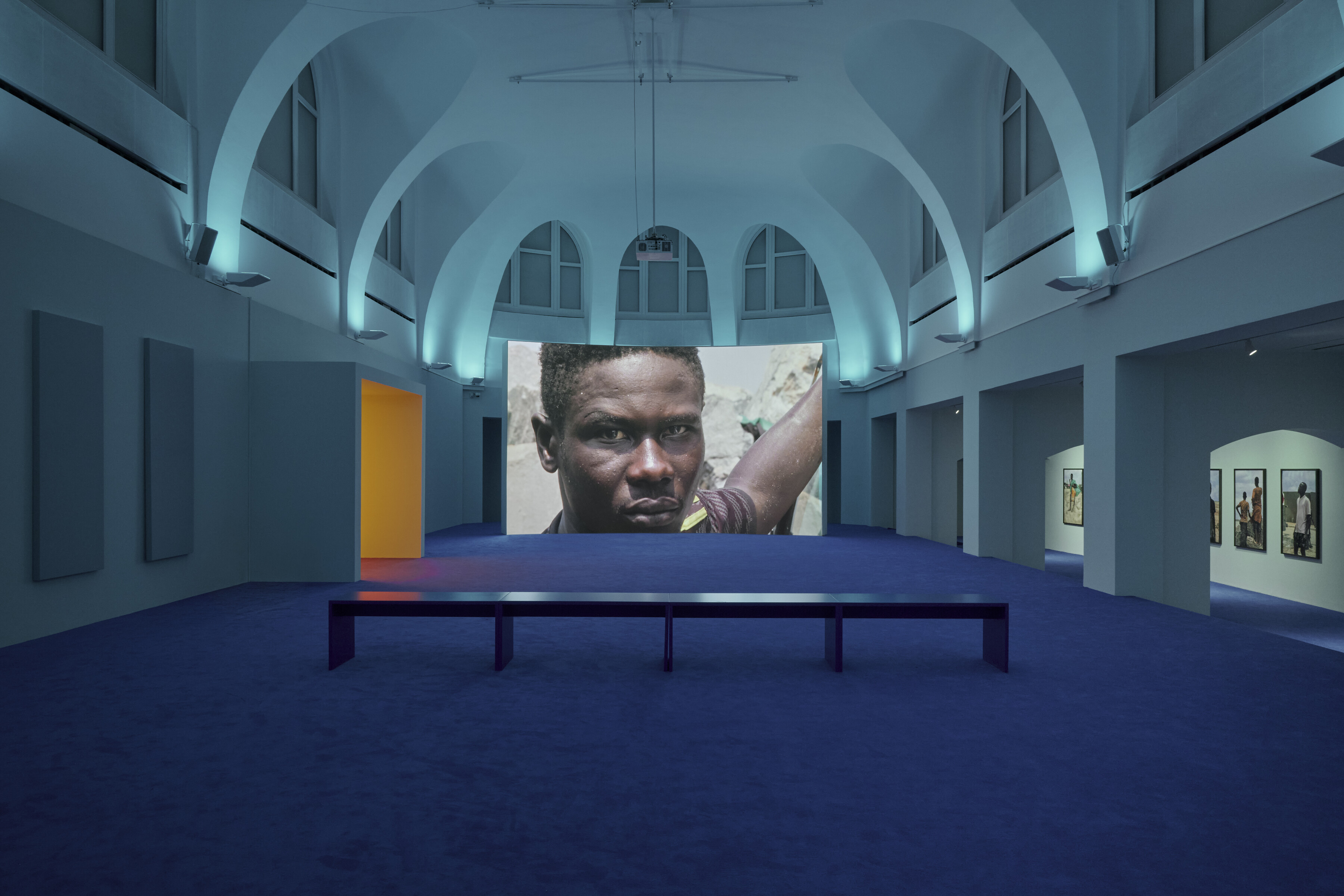
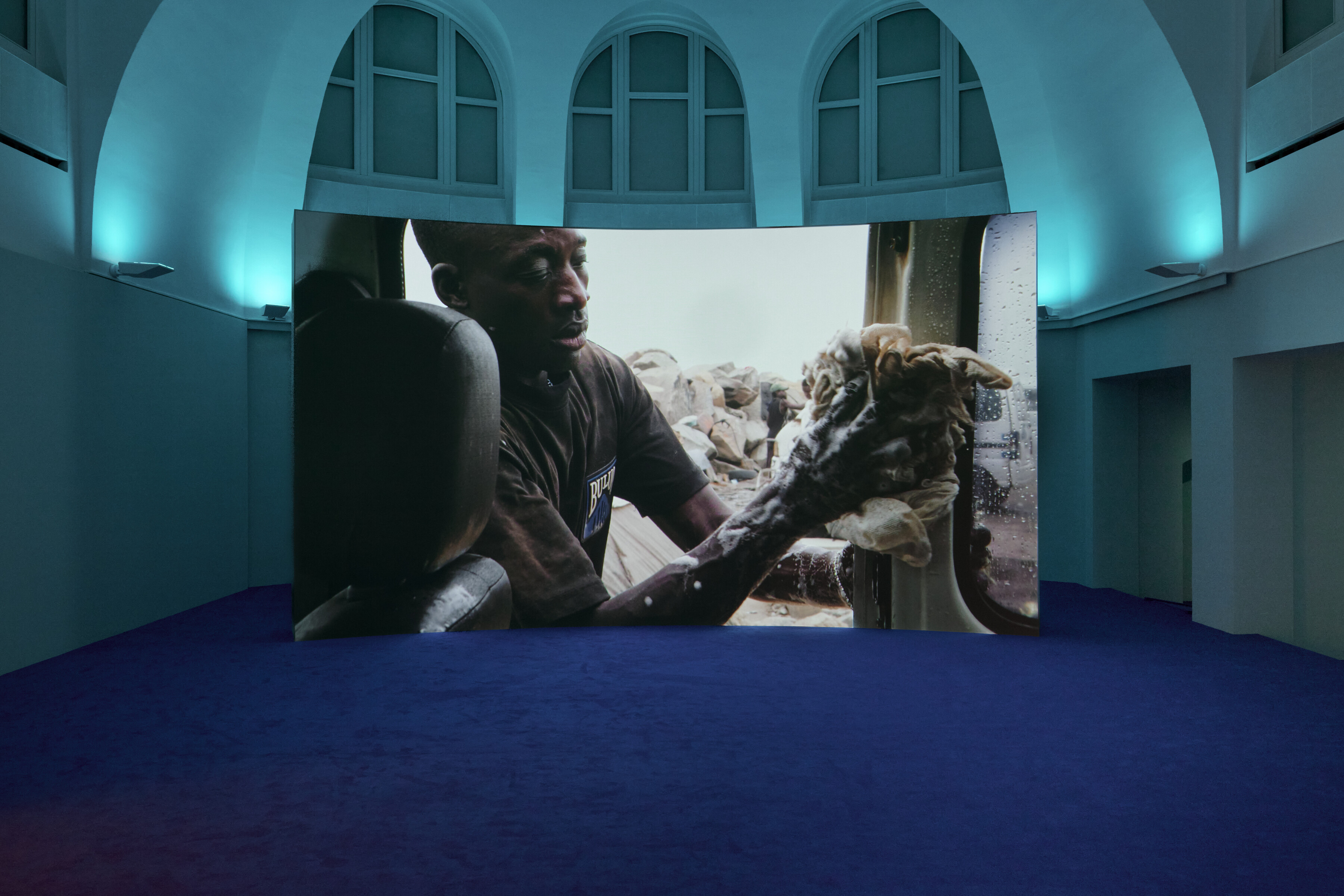
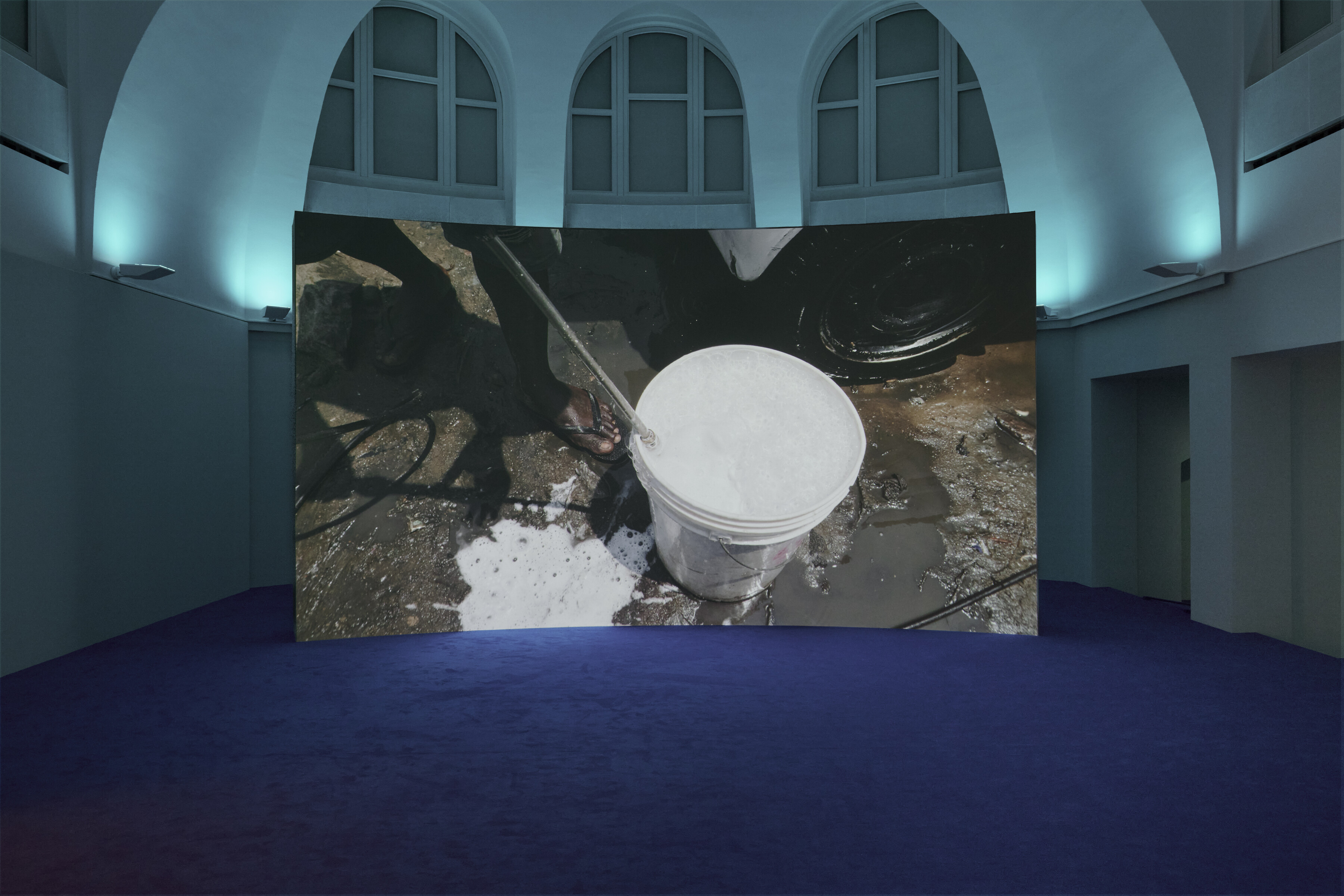
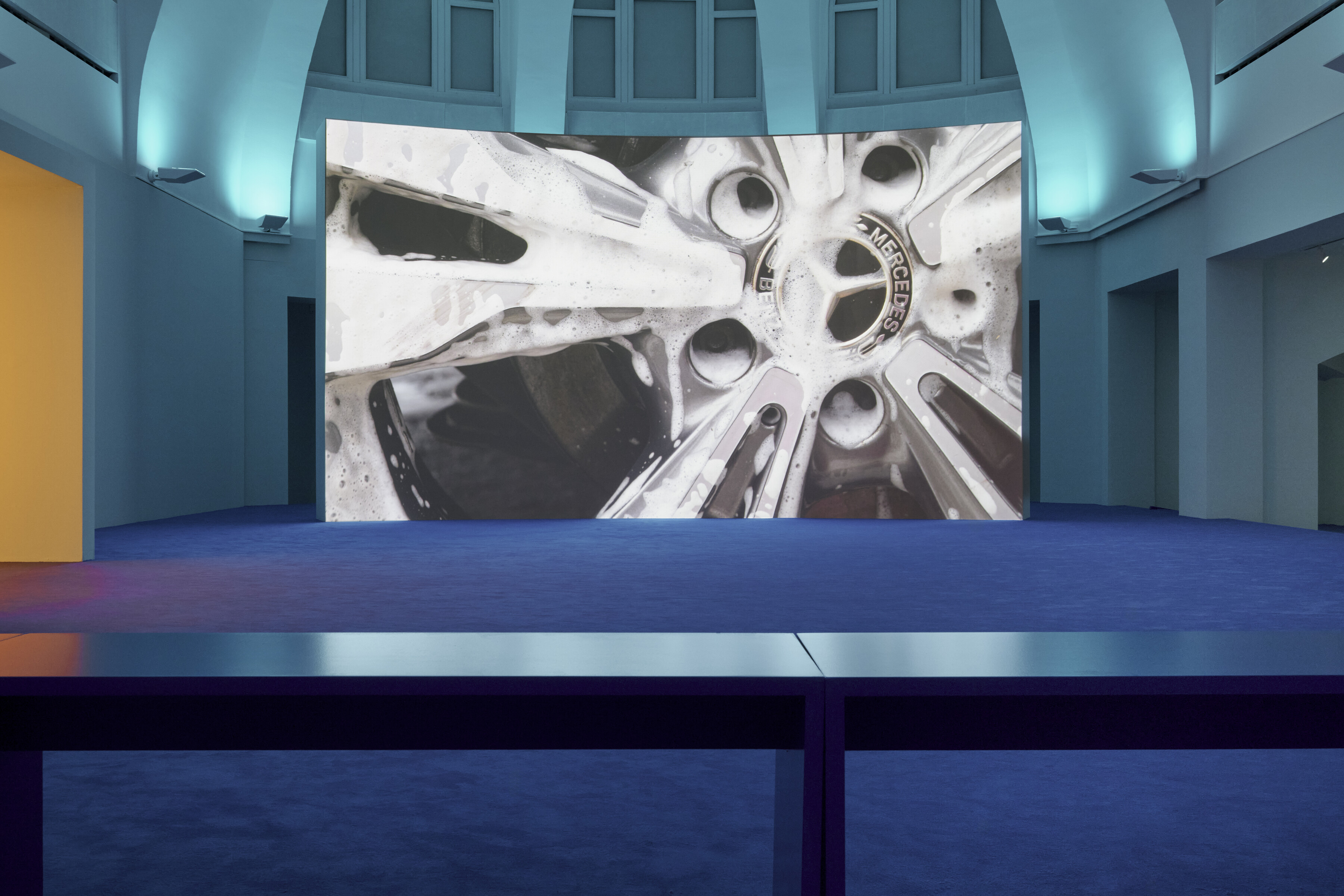
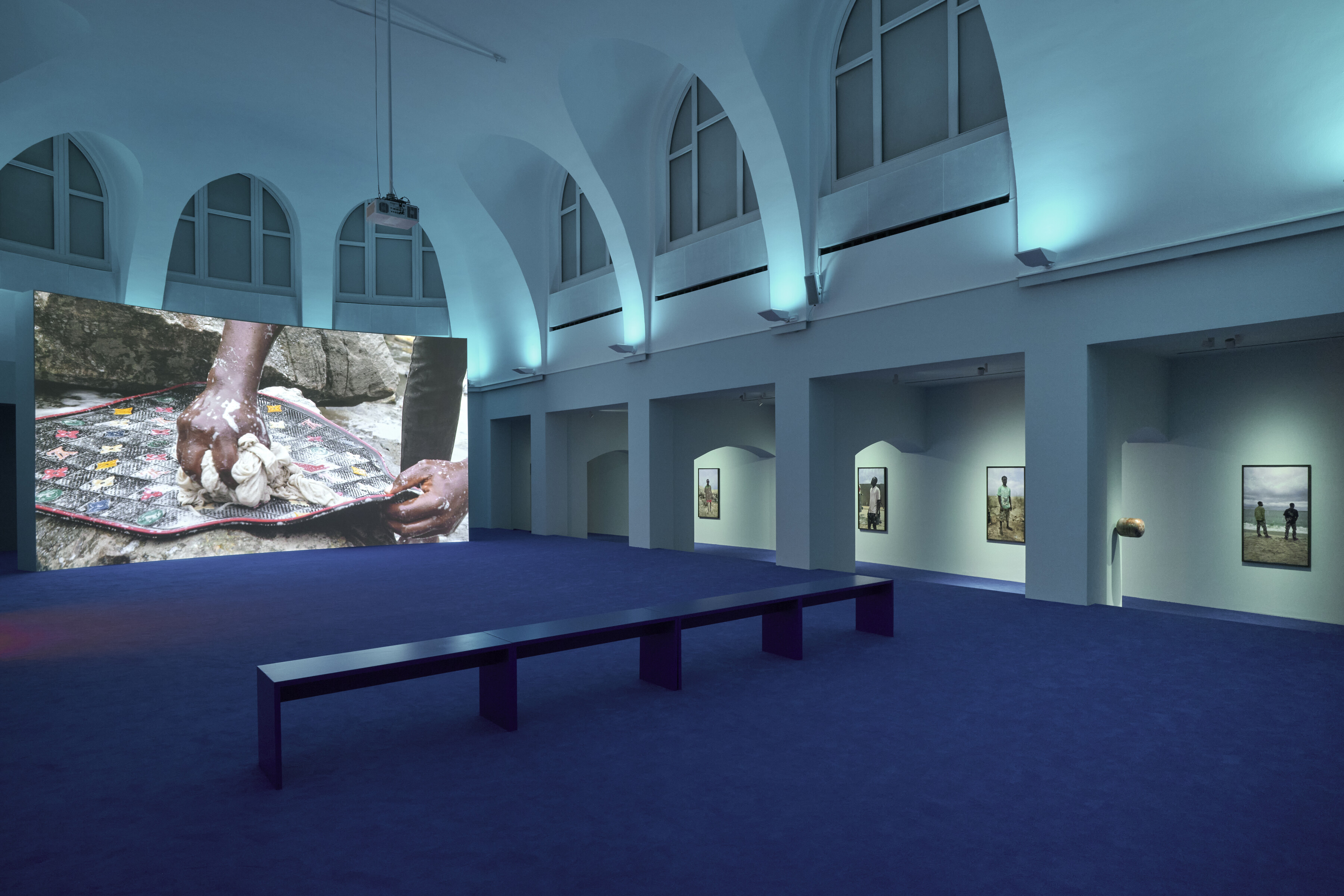
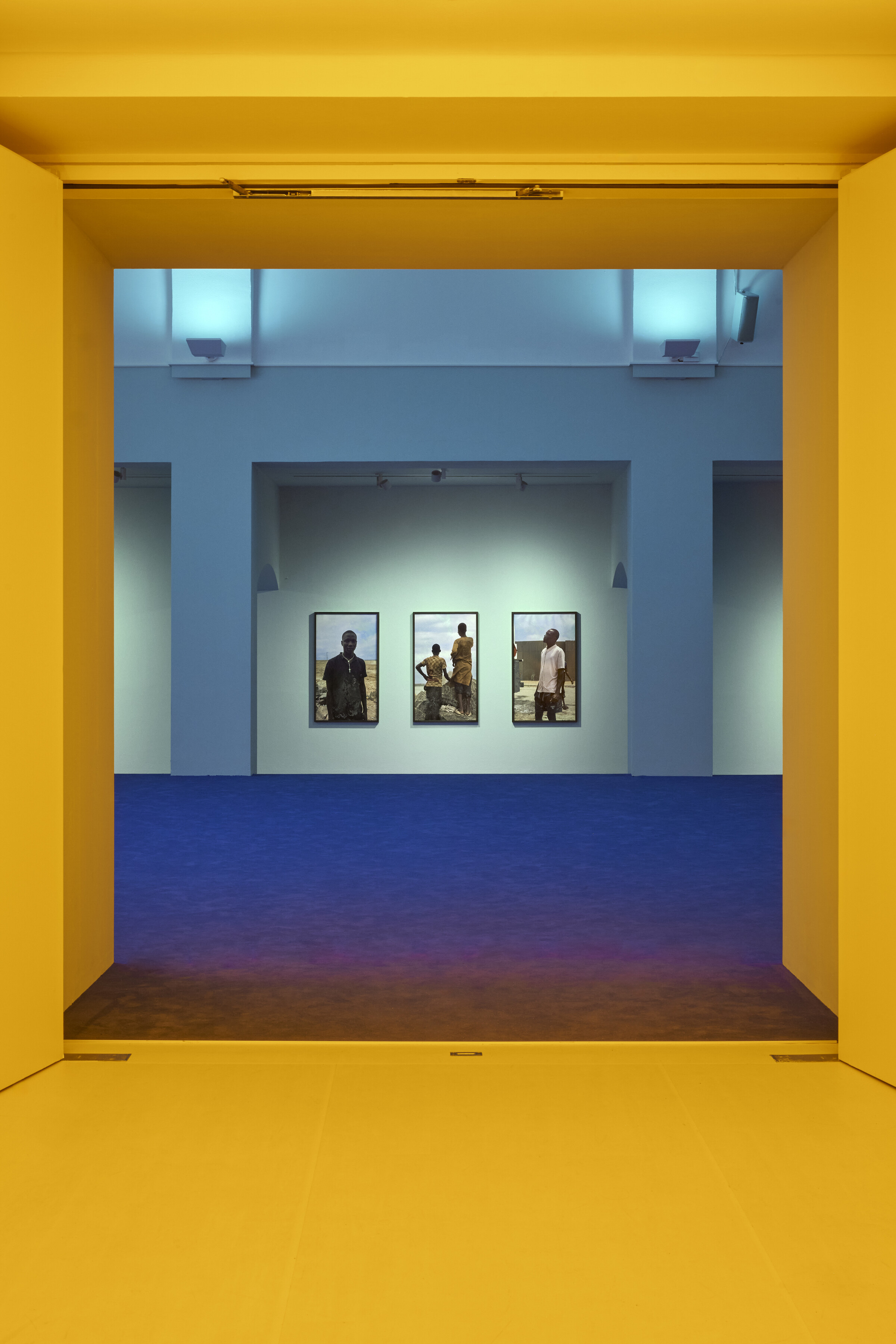
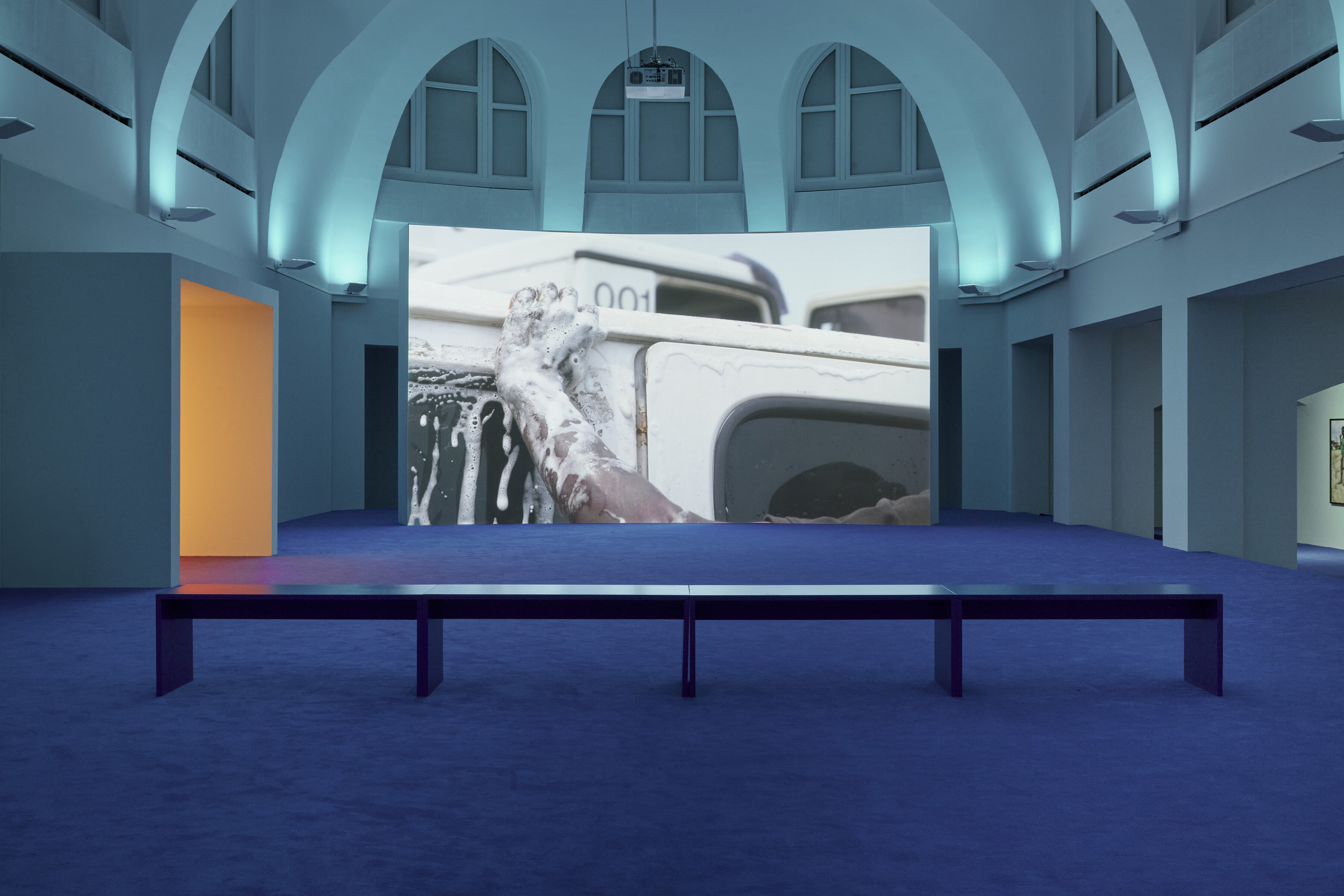
The Artist and Filmmaker Karimah Ashadu (b. 1985, London) lives and works between Hamburg and Lagos. Since the early 2010s, she has developed a practice that homes in on Nigeria, probing notions of independence and value through individuals who work and live there: butchers, cowboys, miners, motorcycle-taxi drivers, and bodybuilders. Their lives are shaped within the country's informal economies, where daily labor secures survival while carrying the dream of a self-determined life. Film forms the core of her practice, alongside photography, sculpture and painting. With Crystalline, the Kestner Gesellschaft presents her first institutional solo exhibition in Germany. At its center is the world premiere of the film WAVES (2026), on view in the domed hall of the Goseriedebad, a former bathhouse. The film is presented alongside eight new photographs and the sculpture Auric Field (2026) in an installation developed for the Kestner Gesellschaft. Like her films, the exhibition spaces are conceived in painterly terms; through the precise use of color and light, Ashadu's moving images become part of the architecture itself.
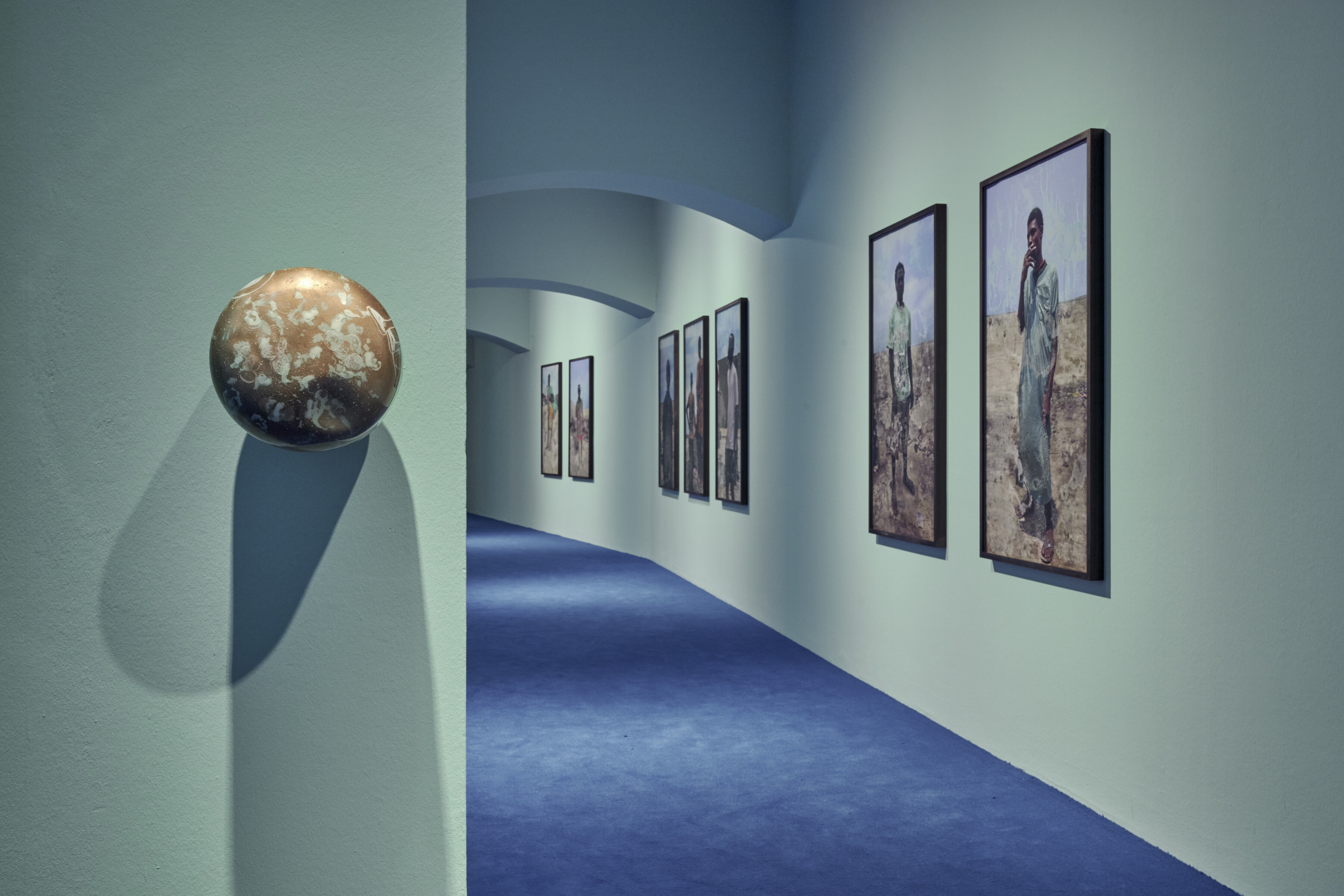
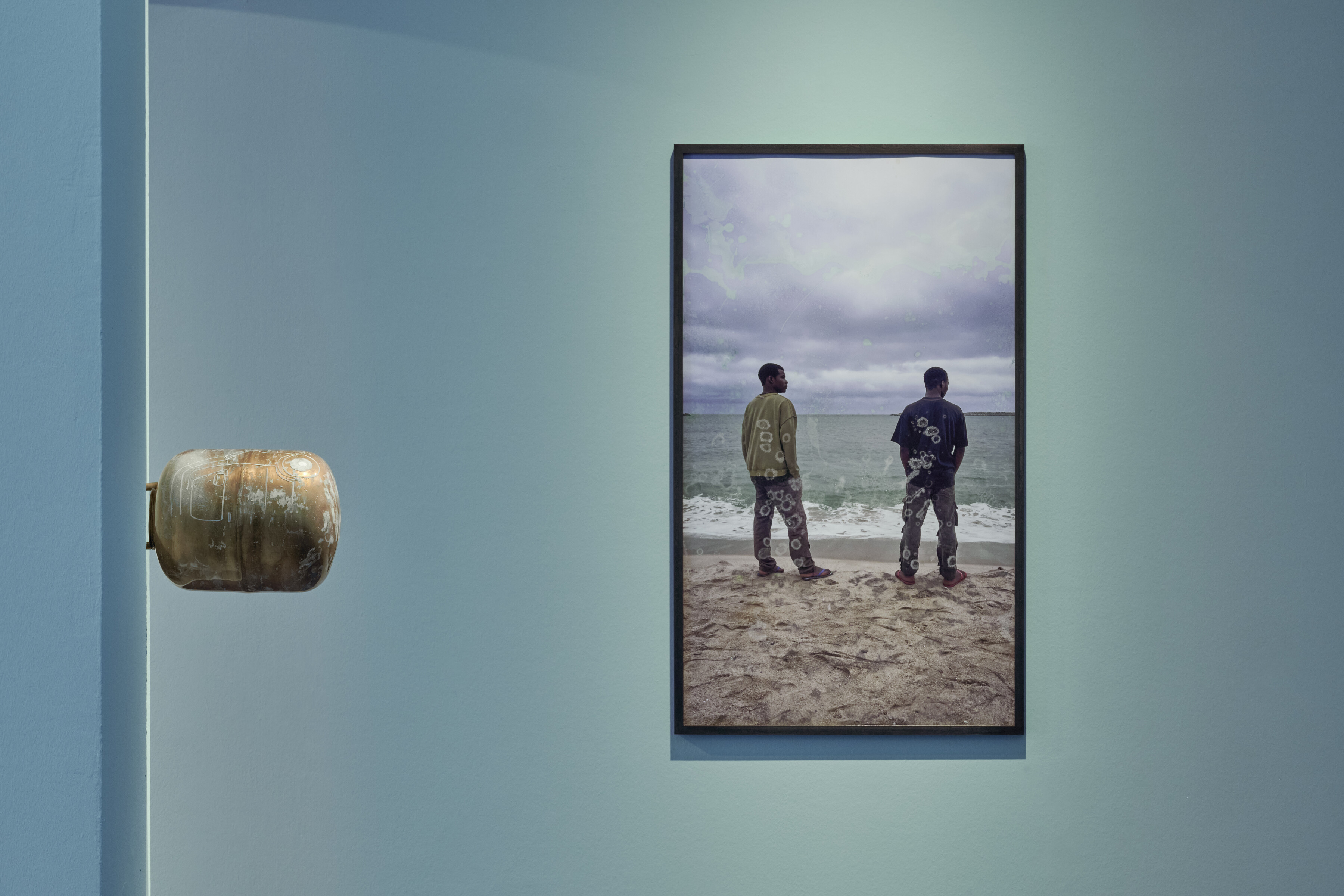
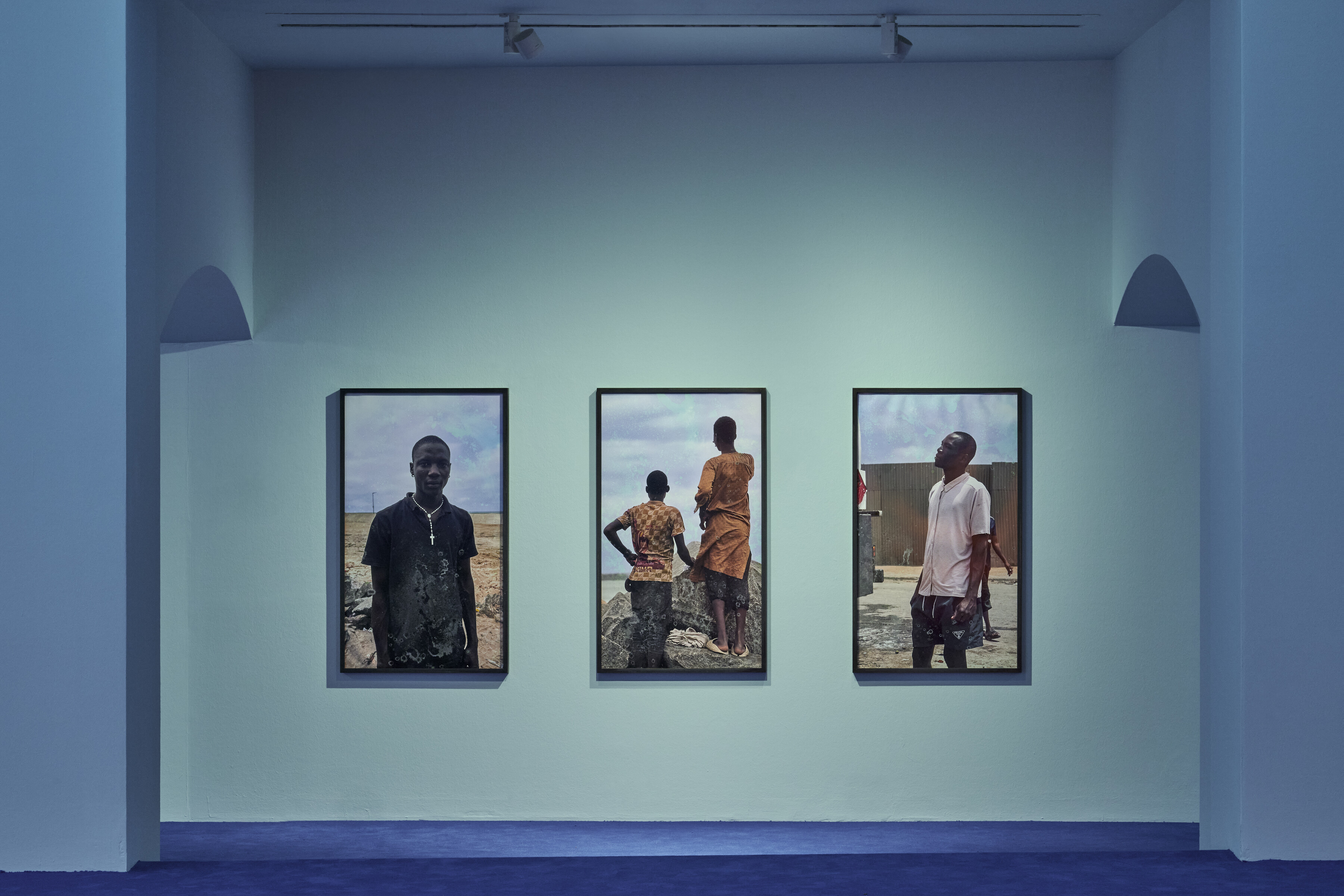
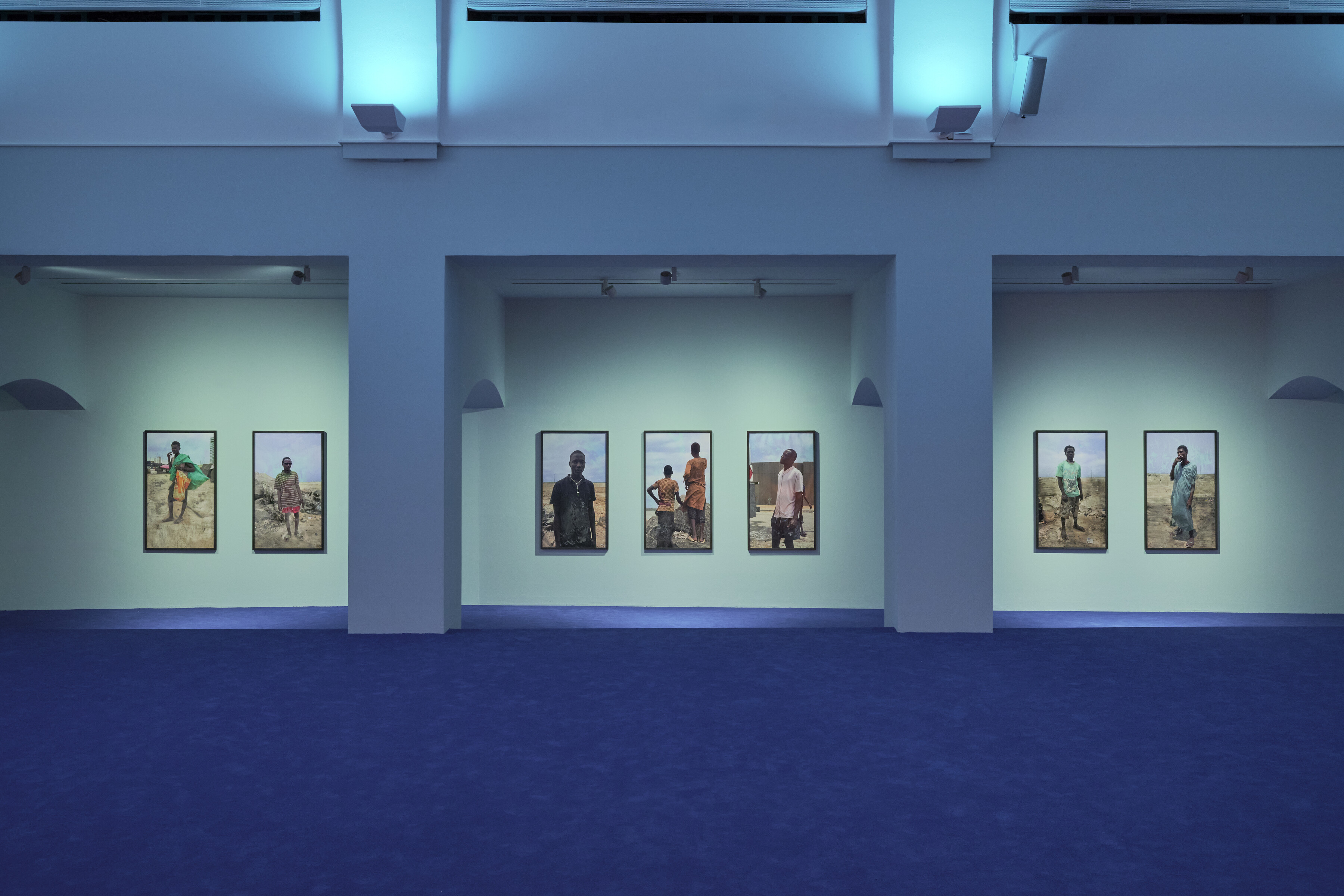
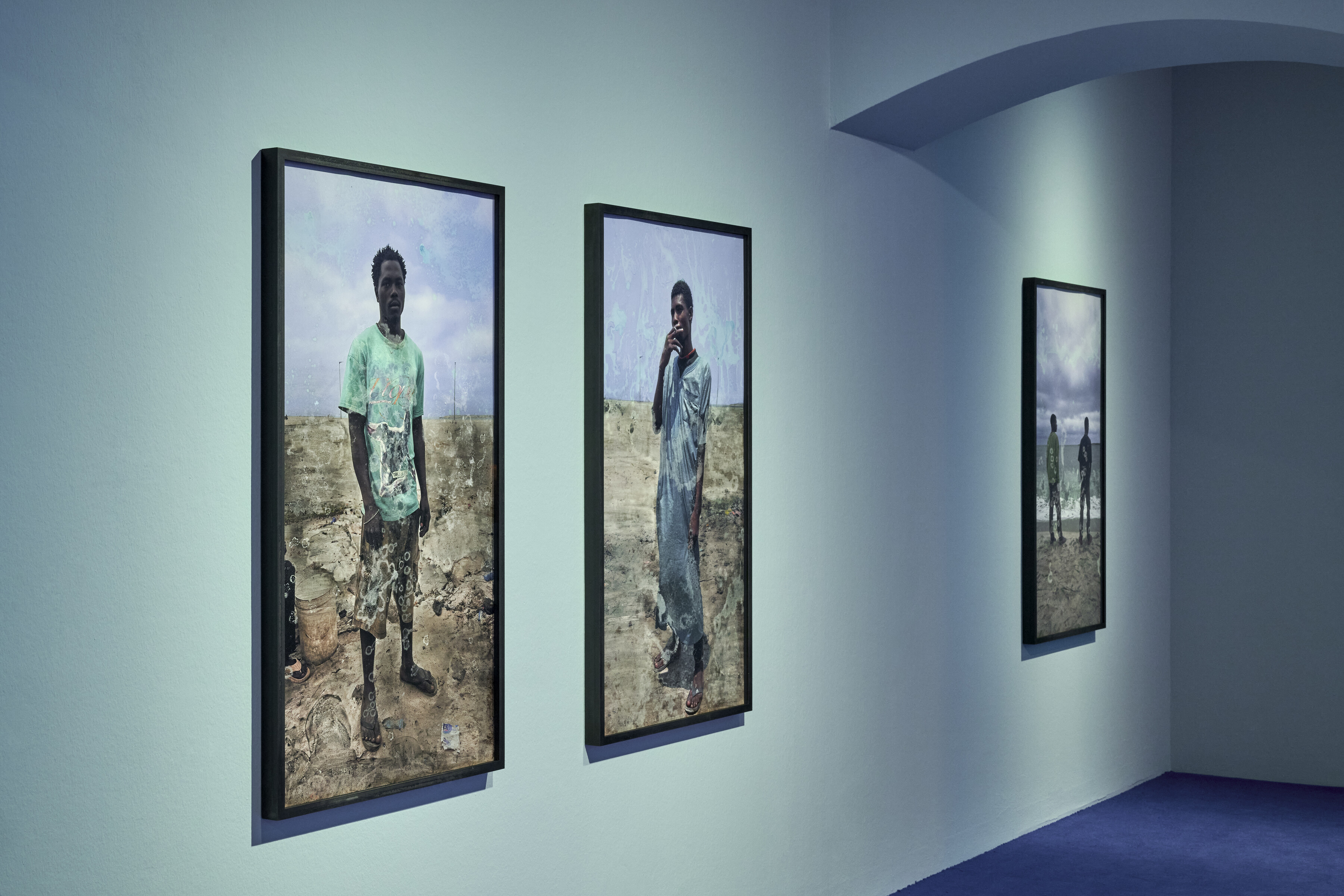
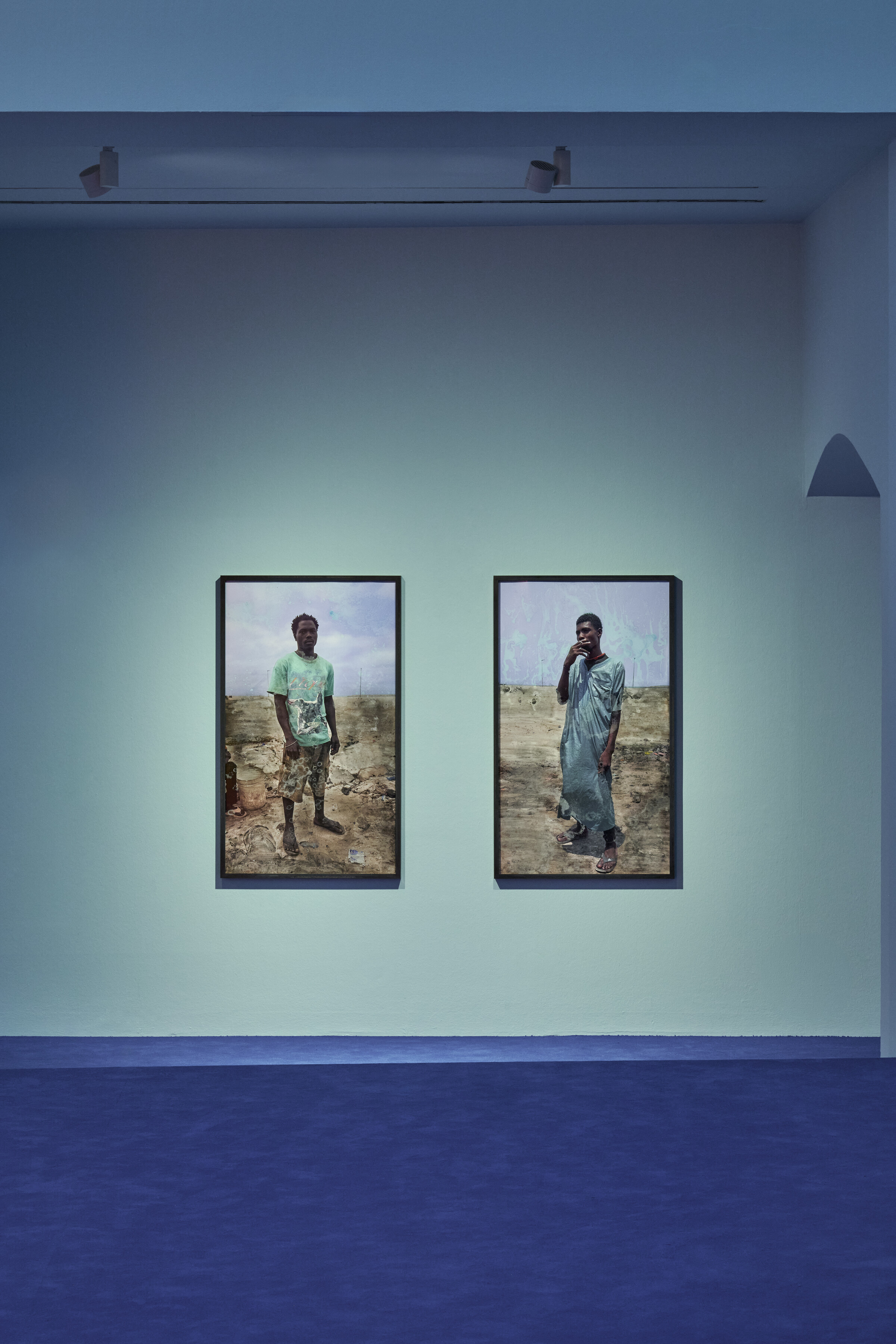
The new film WAVES is devoted to the quotidian labour of an informal car wash in the Oniru district of Lagos, on a narrow strip of land recently reclaimed from the Atlantic Ocean. It follows a group of men as they wash down vehicles, flitting between the car wash and the Atlantic until labor and ocean begin to interweave and mirror each other in concert. Layered over the images are the men's voices in Hausa, the lingua franca of northern Nigeria, recounting what brought them to Lagos. The eight nearly life-size photographs portray protagonists from the film and people from the surrounding area, wearing counterfeit designer clothing. The clothing becomes a form of self-fashioning: a means of asserting visibility, value, and proximity to an economy from which they remain excluded. The surfaces of the photographs have been worked with saltwater, ink, pigment, and bleach. As the water evaporates, salt crystals grow across the portraits, bringing the Atlantic into the physical substance of the work. Bespoke steel frames emphasize the photographs' status as objects, giving tangible weight and structure to images otherwise marked by fragility and change.
The sculpture Auric Field is a found copper water tank whose weathered surface is transformed by Ashadu's impromptu line drawing of one of the film's protagonists. The drawing connects the sculpture to the site of the car wash and inscribes the labor represented in WAVES directly onto the object's surface. Removed from its utilitarian context and placed within the exhibition space, the object undergoes a shift in status and value.
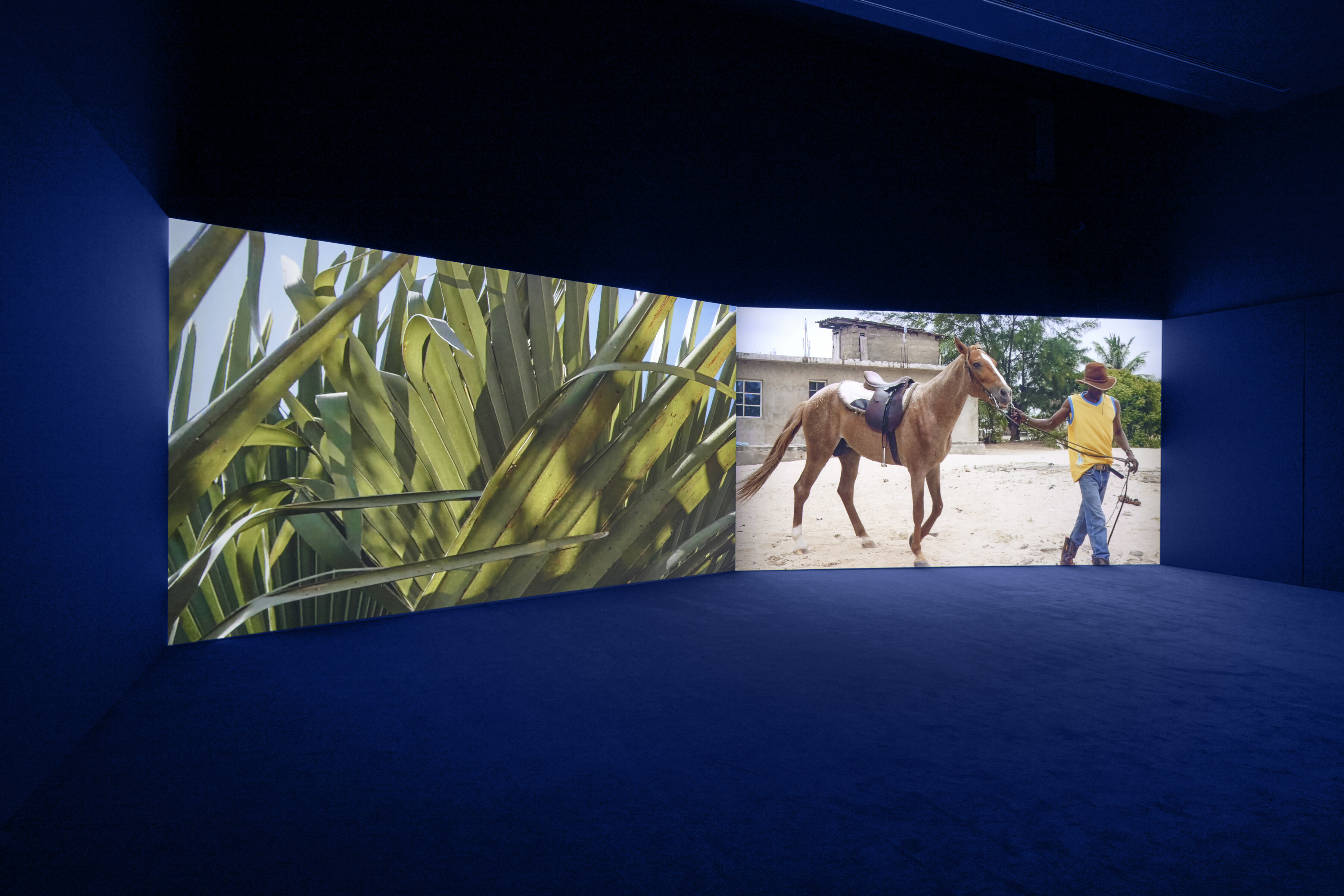
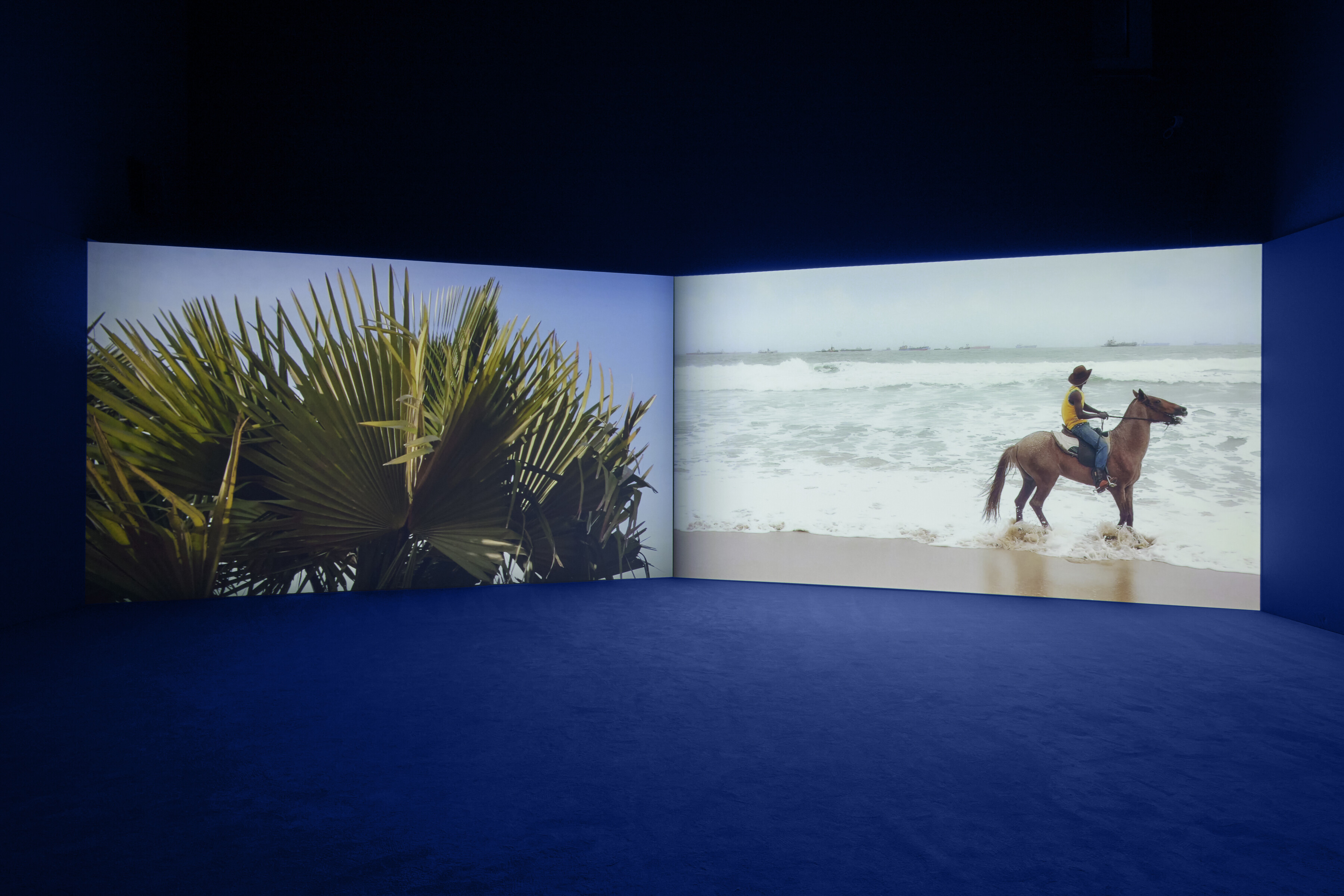
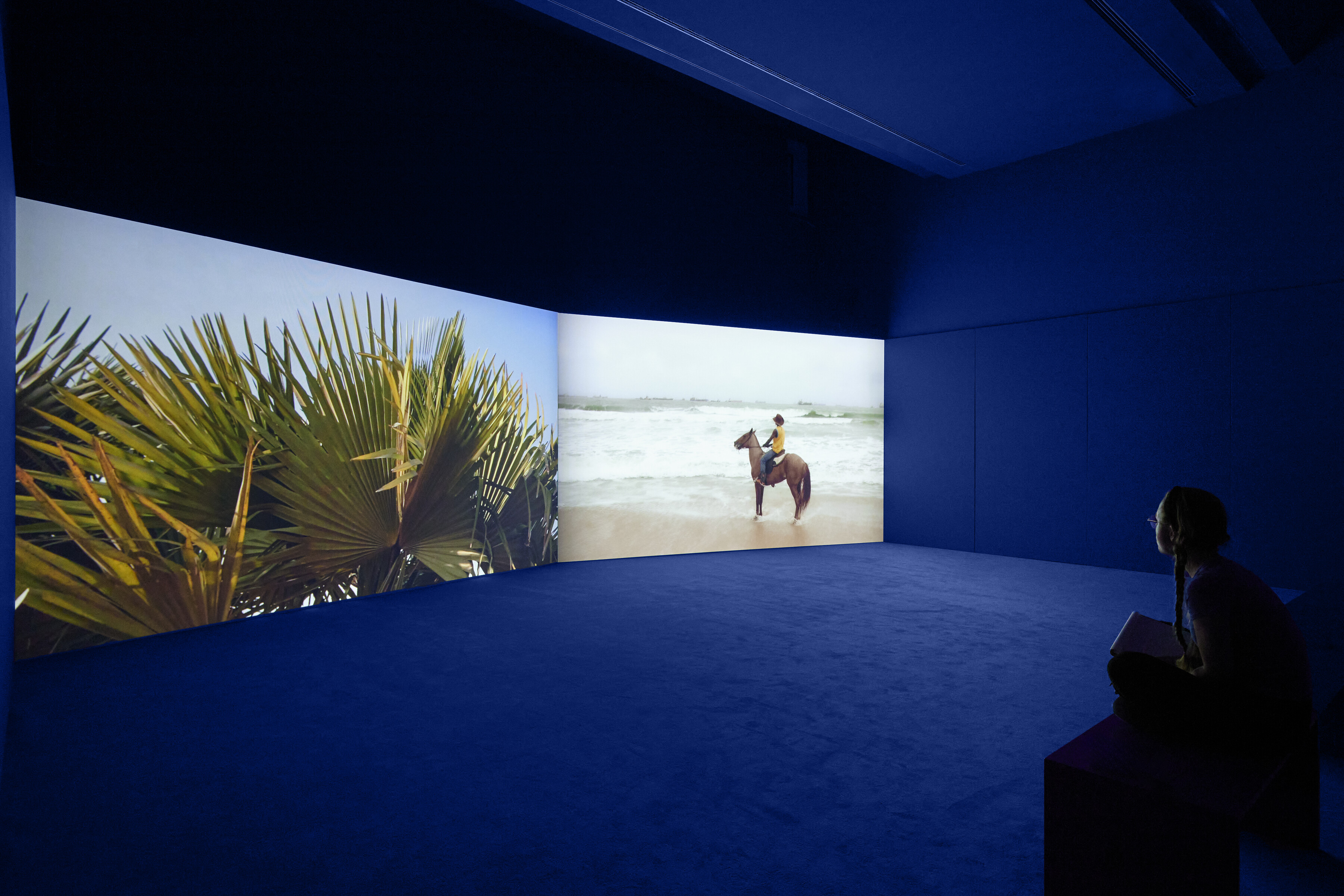
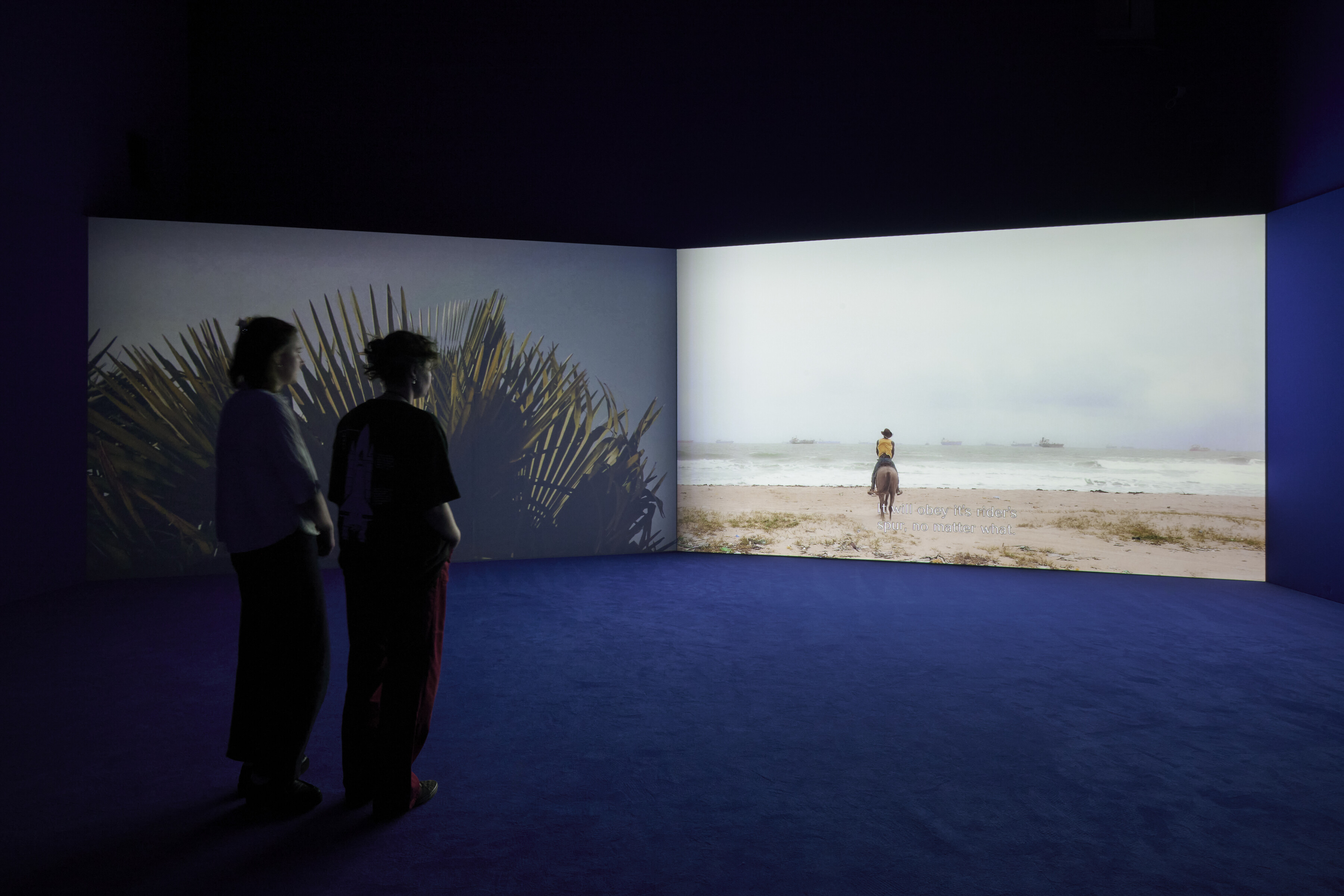
In the adjoining dark-blue exhibition hall, the film Cowboy (2022) portrays a man in Tarkwa Bay, off the coast of Lagos, who has devoted himself to the caring for horses. The camera follows him on horseback to the shore as he speaks about his life, while a second screen opens onto the stormy Atlantic Ocean. Within the film, the figure of the cowboy becomes an emblem of freedom and autonomy. Cowboy sets this image against the realities of lived experience and presents the ocean as a space between promise and carnage. As in WAVES, Ashadu turns her lens toward the nuances of vulnerability within socially constructed, and thus performed masculinity, as well as the forces that shape it.
Crystalline speaks to the creation of value: how it is formed and ascribed through natural processes, material transformation, and the informal labour economy. Together, the photographs and sculpture extend the artist's filmic practice into physical space, entering into dialogue with the film's visual, sonic and temporal registers, while remaining legible as independent works. Water becomes residue, while the labor captured in the film is translated into surface and form, taking on a material presence.
Karimah Ashadu (b. 1985, London) is a British-born Nigerian artist and film director living and working between Hamburg and Lagos. Primarily working in film, Ashadu extends her practice into photography, painting and sculpture. Her work has been shown internationally at institutions including MoMA PS1 and the Museum of Modern Art, New York; Camden Art Centre, South London Gallery, and Tate Modern, London; Kunsthalle Bremen and the Secession, Vienna: as well as Hamburger Kunsthalle, Kunstverein in Hamburg, and the Centre d'Art Contemporain Genève. At the 60th International Art Exhibition – La Biennale di Venezia (2024), she was awarded the Silver Lion for a Promising Young Artist. A solo exhibition at the Renaissance Society, Chicago, is forthcoming. Her first monograph, Tendered, was published by Mousse Publishing in 2025. Ashadu has received the Lichtwark-Förderpreis (2025), the Preis der Böttcherstraße in Bremen (2022), and the ars viva prize (2020), among other awards. In 2026, the University of the Arts London conferred an honorary doctorate on her. Her work is held in the collections of the Museum of Modern Art, New York; the Collection d'art contemporain de la Ville de Genève; and the Federal Republic of Germany's Collection of Contemporary Art. In 2020, Ashadu established her film production company, Golddust by Ashadu, specializing in artists' films on Black culture and African discourses.
Curated by Alexander Wilmschen, with Curatorial Assistance by Berenike Arbeiter
Launching in winter 2026, the publication WAVES expands on the moving-images work by Karimah Ashadu. Conceived as an artist’s book and designed by Studio Claus Due, it brings together research images, stills and a written contribution by Princeton University art historian Dr. Chika Okeke-Agulu. The project is supported by Stiftung Kunstfonds and the Beauftragte der Bundesregierung für Kultur und Medien (BKM), the Kestner Gesellschaft, Hannover and the n.b.k., Berlin.
The Kestner Gesellschaft is presenting an exclusive edition by Karimah Ashadu, which will be available during the exhibition.
Save the Date
On Friday, November 13, 2026, at 6 pm, an Artist Talk with Karimah Ashadu will take place in conjunction with the exhibition.
Learn more about the exhibition and read the Exhibition Booklet: Karimah Ashadu. Crystalline.
Installation Images
Events
Meet the Team: Exhibition tour with Berenike Arbeiter
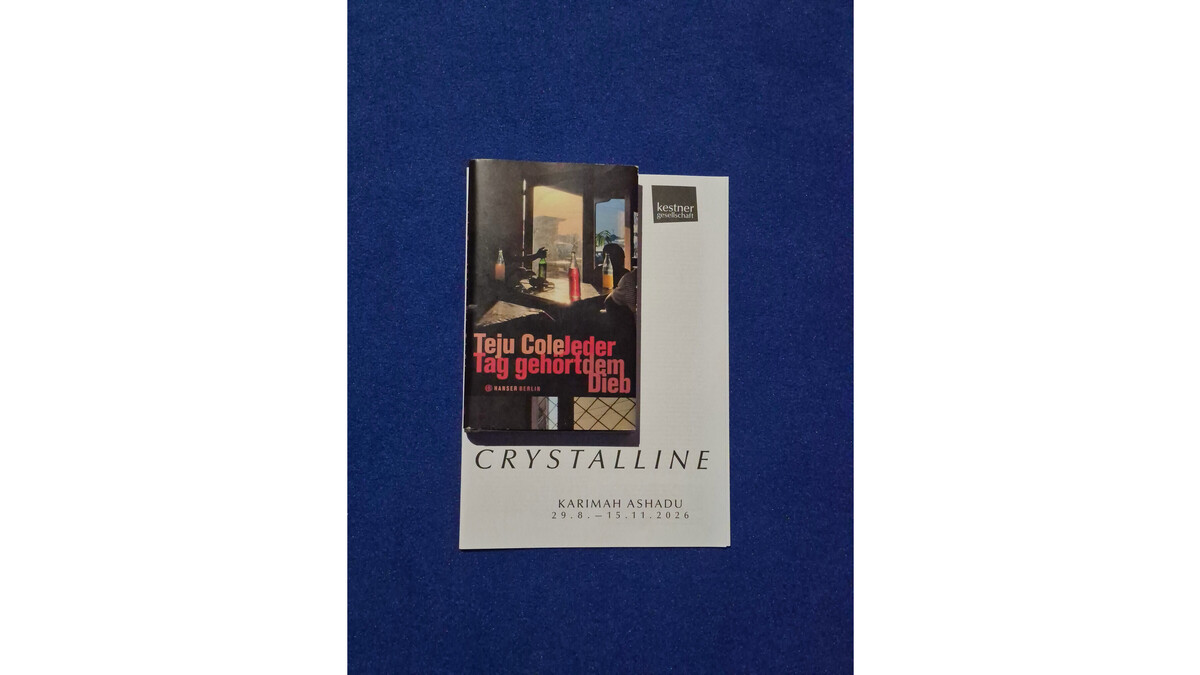
Reading by Tom Scherer, Schauspiel Hannover, with an introduction by Gabriele Sand
Teju Cole, Jeder Tag gehört dem Dieb
Meet the Team: Exhibition tour with Leonie Funke
Visit us
Patrons / Partners